I remember the early days of smartphones and the first time I was able to look at emails from my handheld device. That was around 2006-2007 – a revolution. Some saw this as a new constraint, an extra addiction to their already packed work day. Others considered it added freedom. I went from the first state to the other in a week or two!
It was now possible to check and answer emails from anywhere… Fast-forward to 2021: with the power of current smartphones, we can obviously do much more than just email. We can transform newsrooms into mobile newsrooms!
Contribute anywhere. Produce everywhere!
Dalet On-the-Go has now been around for some time but, until now, newsrooms and their journalists were mostly using the tools that are made available to them inside the physical newsroom. With the arrival of the pandemic and the need to work from home, this has radically changed. News professionals now require access anywhere anytime to all newsroom resources and workflow. All from a smartphone: rundowns, stories to preview or approve, sending pictures, videos, audio and sharing ideas, receiving assignment updates… and all under varying user profiles. Welcome to the mobile newsroom!
With customer success always in mind, this could only mean one thing: adapting our product roadmap and completely revamping Dalet On-the-Go, the Dalet mobile newsroom client. It has been an intense process involving some of our users to help design this new experience and provide the right features to news professionals.
On-the-Go goodies…
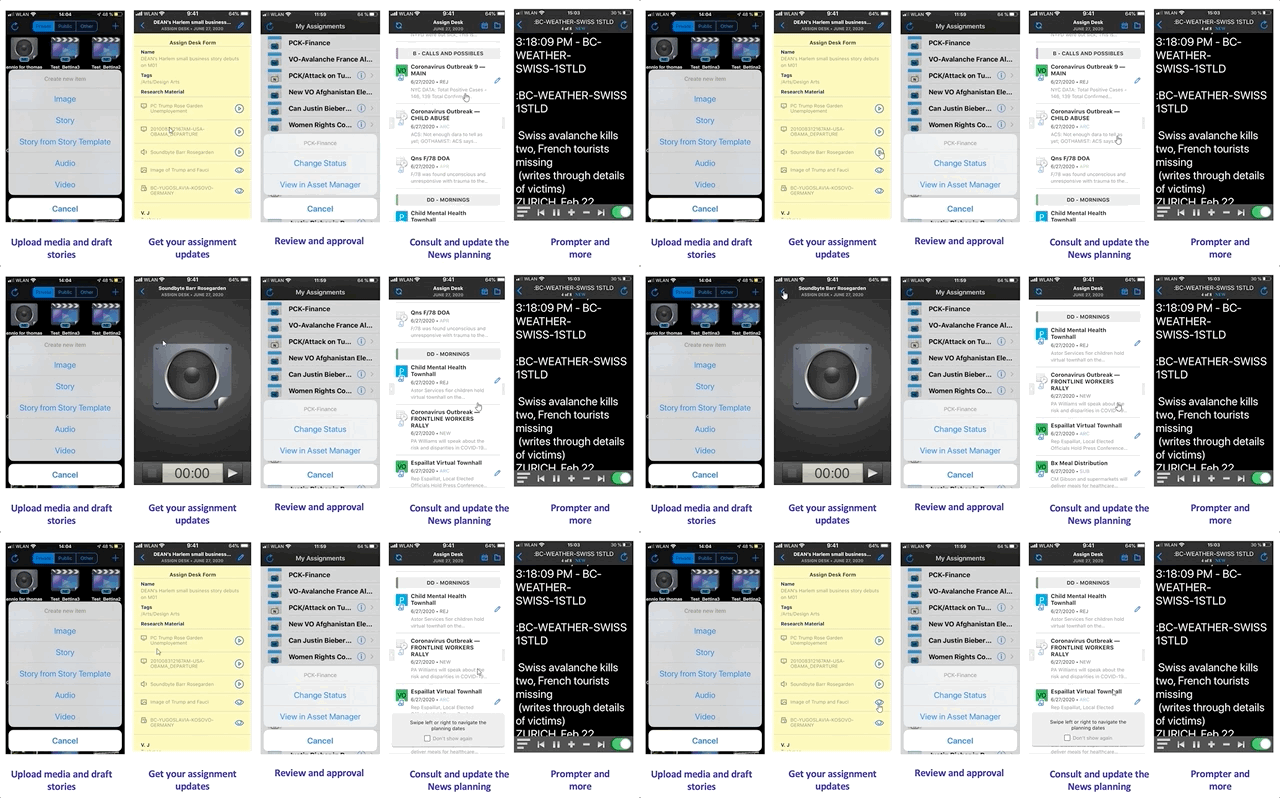
So, what is new in recent releases? Well, amongst the many user interface and usability improvements, a range of new capabilities that’ll transform your mobile newsroom:
- Audio stored in your smart phone can now be shared seamlessly to Dalet Pyramid or Dalet Galaxy five using the iOS or Android app. This is particularly interesting for radio workflows.
- Support for deep links allows you to share any media content to the newsroom from any mobile application. A game-changer!
- Support for rundown preview, with the ability to have first-reading and second-reading views.
- We have also added the ability to view graphic objects inside the stories.
- And multiple improvements in metadata display.
The good news: We’re only getting started!
And on this, we have two pieces of good news: we now provide new application releases every couple of months, with new features made available to all Dalet On-the-Go users and their mobile newsrooms on a regular basis.
Secondly, Dalet On-the-Go is compatible with both Dalet Galaxy (version 4) and Dalet Galaxy five platforms.
Featured in: Dalet On-the-Go | Digital Newsroom | Mobile Journalism | Mobile Journalism App | Mobile Newsroom | News Production | Newsroom | Remote Work |

Raoul Cospen is a Dalet pioneer, and played an integral role in driving the transformation to IT-based, fully integrated newsrooms for the past two decades. He has always felt passionate about being at the heart of newsroom operations, a passion that has driven his vision across multiple roles at Dalet. In his current role, Raoul works closely with Dalet’s customers and partners to define and deliver the most suitable solution to address their media workflow and newsroom requirements.
More Articles By Raoul