
Over the years I have been supplied with a number of tapes to assist with ingest workflow investigation or to assist customers in identifying the source of issues they encounter. More often than not a tape which arrives on my desk has associated metadata, be that a well formatted label on the tape detailing exactly the contents, frame rate, start and end time codes, audio details…
or a badly folded sheet of paper with the information scribbled in pencil, either way I know the contents of that tape long before it goes anywhere near a VTR, the same cannot be said for file based content.
While this does not pose a problem for me, the number of files I receive is not excessive and I can simply import the file into iCR or one of the many free utilities available on the web and gather most of this data.
However, what if we scale this up a little, say a post-production facility receiving 100’s of files a day, where there is no standardization for content delivery from customer to customer and therefore every file is slightly different, analysing each of these files and gathering all this information is time consuming and therefore does pose a problem.
Things are changing though, over recent months more and more of the files made available are accompanied by XML metadata. I guess it could be driven by all the industry talk of DPP or the realization that interchange of files, import to MAM or implementation of automated workflows is quicker, easier and therefore cheaper when all the file metadata is readily available.
The ability to create an XML Metadata file is really quite straightforward using the free Metadata plug-in for iCR, the steps below show just how simple it is;
Step 1:
Start by contacting AmberFin and requesting the Generic Metadata Plug-in, in return you will be supplied with the files to be copied to the iCR install directories, a restart of the GUI and you are ready to go.
Once in the GUI, click on Windows menu and highlight plug-ins and load the available plug-in.
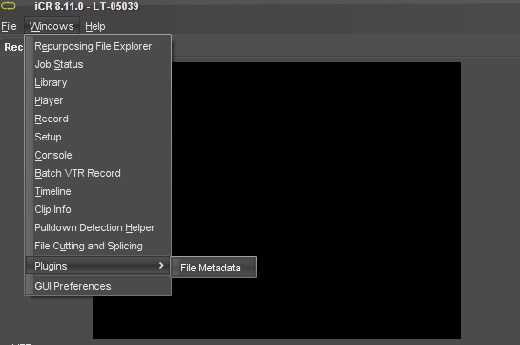
The plug-in will now embed itself into the iCR GUI.
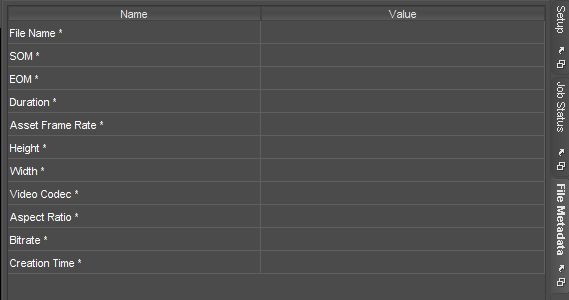
Step 2:
Upon load of a file into the iCR player the core metadata fields are automatically populated.
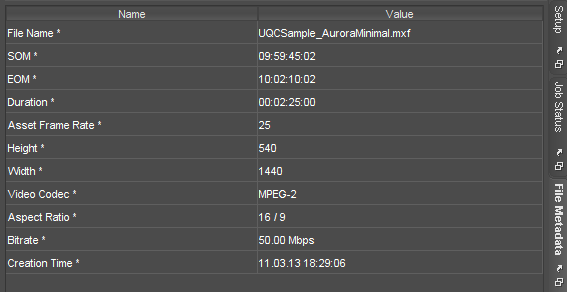
Step 3:
The data contained in the plug-in can then be exported to an XML Metadata file by the simple click of the save button.
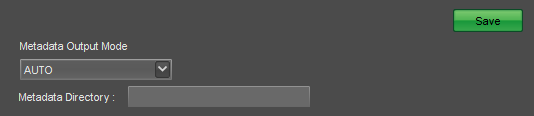
It really is that simple…
But what if the metadata displayed above doesn’t meet your requirement, key information is missing or not available? It’s a good thing that AmberFin also allow you the ability to edit the plug-in layout and the data it gathers, but that’s for another time…
Featured in: Dalet AmberFin | Metadata |

With 30 years in the industry, Bruce looks after Media Technology for Dalet. An engineer who designed antennas, ASICs, software, algorithms, systems and standards, Bruce is best known for being @MrMXF and you can get his book on Amazon.
More Articles By Bruce