Not to be confused with its more illustrious name sake, the IMF (Interoperable Master Format) is a file format that is designed to simplify the file exchange process by creating a single – standardized – master file for distribution of content between businesses into multiple territories:
Separate the content into various ingredients
Most films these days have thousands of different main and promotional versions for each individual market, as well as airline and television edits, etc. With IMF, you won’t need to create a thousand plus copies of the content; what the standard does is separate the content into various ingredients or components (namely, AS02 MXF media files), a number of ‘recipes’ (Composition Play Lists) and a selection of instructions (or Output Program Lists) appropriate for each of those audiences. IMF is designed to take the right mix of ingredients, the right recipe and a tailored set of instructions, to create a dedicated version for each market, without having to duplicate files.
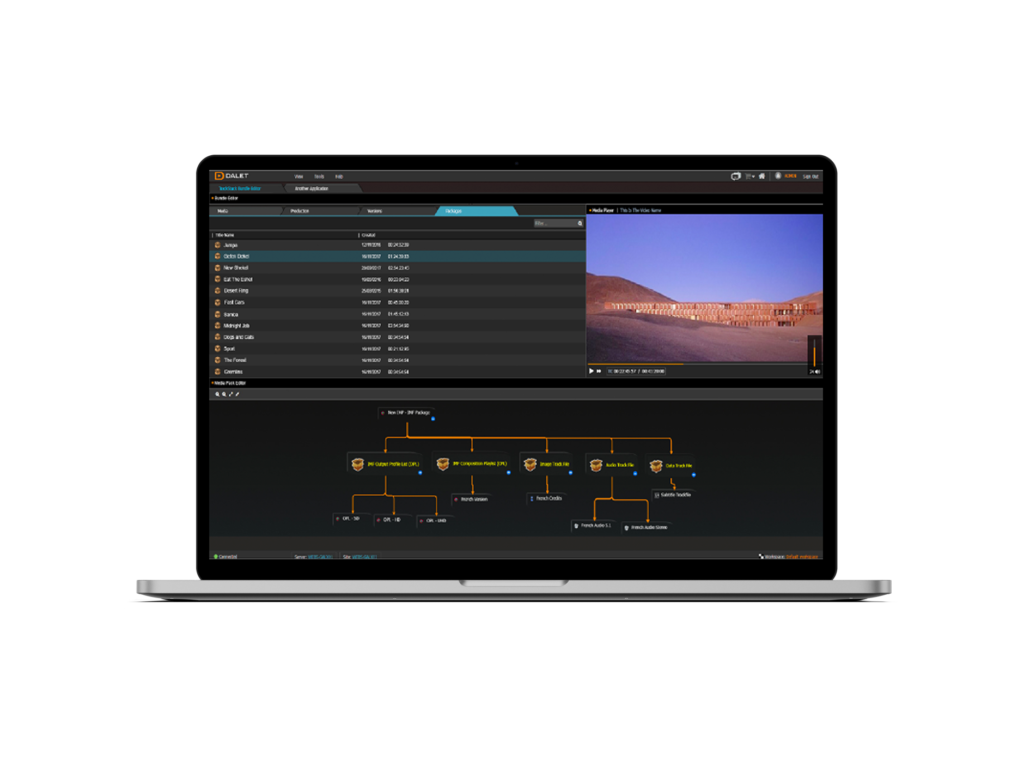
Create a standard package to simplify the creation of multiple versions
Currently, editors still need to put together individual edits and ship these to each market. What IMF will do is to circumvent this lengthy, and not to mention costly, process by creating a standard IMF package which will go everywhere, and instead of shipping a specific media file, to say Malaysia, you will simply have to validate the editing list and send this to the territory where the appropriate version will be rendered from the master media files. This isn’t to say that you don’t need the same level of skill and discernment during the editing process as we currently have. What it does mean though, is that the data transfer will be significantly less and the number of processes and duplication of effort and file creation necessitated by all the file formats received, will be significantly lower.
Almost there!
While it is still in a draft specification, the standard is making great progress and is currently getting close to final review by SMPTE. It is supported by over 100 companies worldwide, including major studios and broadcasters, vendors and manufacturers like AmberFin. Efforts are also underway to rally wider industry support for the initiative.
If we get it right, IMF will become one of the most significant bits of hidden technology in our industry. From the end-user perspective, IMF will not be something they ever see, but which will bring significant efficiencies to their workflow; the idea is that it will be so boring, it will all just work. Read my second post on IMF here.
Featured in: Dalet AmberFin | IMF | Media Workflows | MXF | SMPTE | Transcoding |

Lee is a seasoned video production and distribution specialist and former product strategist for Dalet media workflows. With more than ten years experience, he ensures the successful launch of industry-leading products in addition to complex video workflow deployments with some of the largest media companies and brand enterprises worldwide.
More Articles By Lee